Ellis Keller · 24 September 2026
Examining Long-Term Impacts of Domain Changes on Specialized Content Networks
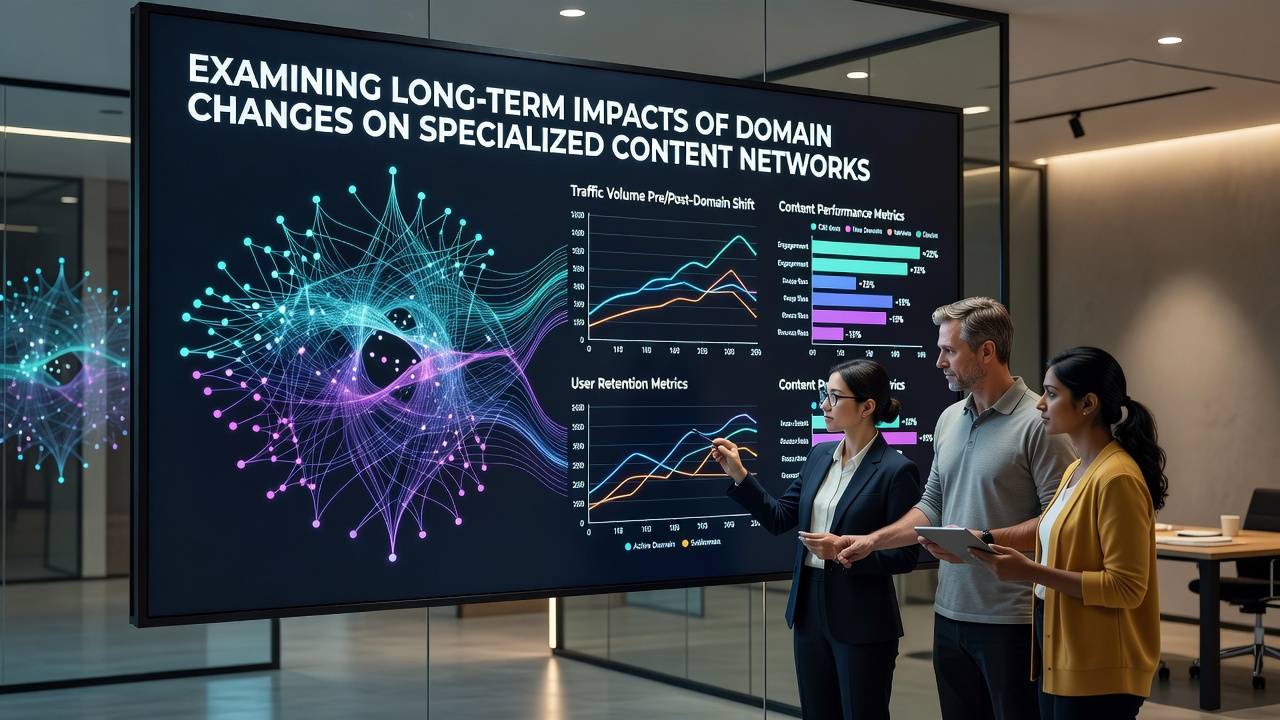
Domain changes in specialized content networks involve alterations to web addresses that support focused collections of sites sharing thematic or operational ties, and these shifts produce measurable effects that extend well beyond initial implementation phases. Research indicates that such modifications often trigger adjustments in search visibility, audience reach, and internal linking structures, with patterns emerging over periods that span multiple years rather than isolated quarters. Data from various digital infrastructure analyses reveal that recovery timelines vary according to network scale, content depth, and technical execution quality.
Defining Domain Changes Within Niche Ecosystems
Specialized content networks encompass clusters of websites dedicated to particular subjects such as technical documentation, regional archives, or professional resources, and domain changes occur through migrations to new top-level domains, rebranding exercises, or consolidation under unified addresses. Observers note that these transitions frequently arise during platform updates or ownership transfers, where operators seek improved branding alignment or technical efficiencies. According to findings from a University of Melbourne study on digital infrastructure, networks undergoing domain alterations in 2023 demonstrated sustained ranking fluctuations that persisted into subsequent annual reviews, highlighting the distinction between immediate redirects and enduring authority signals.
Those who've examined migration logs point out that partial domain shifts, where only select subdomains transition while others remain fixed, create fragmented user pathways and complicate indexing processes for search engines. Evidence suggests that complete network-wide changes, by contrast, allow for more consistent application of canonical tags and sitemap updates, though initial crawl budgets may still experience temporary constraints.
Tracking Effects Across Extended Timeframes
Long-term monitoring of domain-altered networks shows that traffic stabilization often requires 18 to 36 months, during which metrics such as organic sessions and referral patterns undergo repeated recalibrations. Studies found that networks focused on educational materials retained higher retention rates post-migration compared to those centered on time-sensitive news aggregations, because evergreen content benefits from accumulated backlink profiles that gradually reassert influence. In September 2026, additional datasets compiled by the European Commission on digital single market initiatives are expected to provide comparative benchmarks across member states, offering granular breakdowns of how domain consistency correlates with cross-border audience engagement.
But here's the thing: external factors like algorithm updates from major search providers can amplify or mitigate these impacts, and researchers discovered that networks with diversified hosting arrangements recovered faster when domain changes coincided with broader infrastructure enhancements. Figures reveal gradual improvements in domain authority scores after the two-year mark in multiple tracked cases, underscoring the role of consistent content updates in rebuilding trust signals.
Illustrative Patterns From Documented Transitions
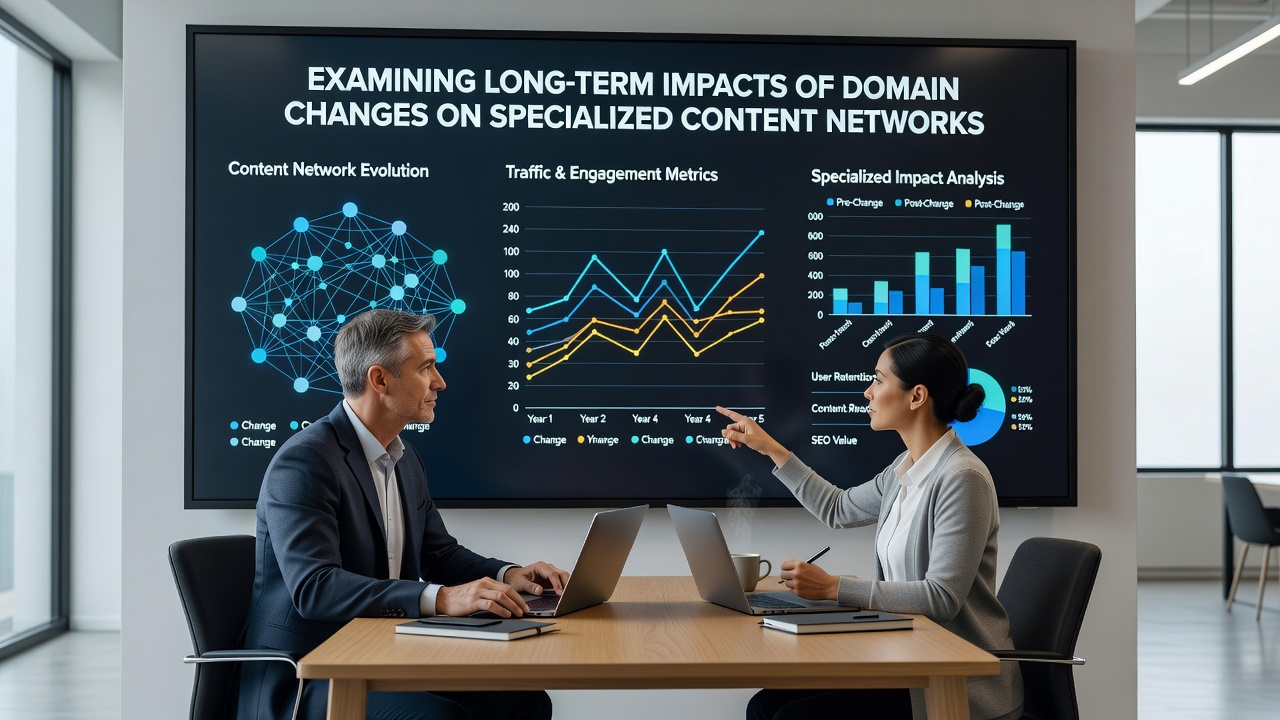
Take one research initiative that followed a network of regional history archives through a domain consolidation process completed in early 2022. The project tracked inbound link distributions and observed that legacy citations pointing to previous addresses continued to drive measurable referral traffic for over 30 months, even after full implementation of permanent redirects. What's interesting is how internal page structures adapted during this interval, with new navigation hierarchies emerging to compensate for any initial fragmentation in site maps.
Another examination of a professional development resource cluster revealed that domain extensions incorporating geographic indicators helped preserve localized search performance in certain markets, whereas generic top-level domains required supplementary geo-targeting configurations to achieve similar outcomes. Data shows these adjustments influenced mobile versus desktop engagement ratios differently across regions, with Canadian digital economy reports indicating stronger mobile recovery curves when domain changes incorporated responsive design elements simultaneously.
Elements Shaping Sustained Outcomes
Technical preparations such as comprehensive redirect mapping and pre-migration crawl audits contribute to smoother long-term trajectories, while content teams that maintain update schedules during transition periods help preserve topical relevance. Those who've analyzed post-change performance metrics emphasize the value of monitoring both direct traffic sources and secondary indicators like dwell time and bounce patterns, which often stabilize later than raw visit counts. Industry organizations including the Interactive Advertising Bureau have compiled guidelines that address these monitoring practices across diverse network types.
Yet external dependencies remain influential, since changes in search engine indexing priorities or shifts in user behavior patterns can interact with domain-related variables in unpredictable ways. Evidence suggests that networks maintaining active outreach to partner sites for link updates achieve more consistent authority recovery, particularly when those partnerships span multiple jurisdictions.
Conclusion
Long-term examination of domain changes within specialized content networks demonstrates that impacts unfold across extended intervals marked by iterative adjustments in visibility, linkage, and audience interaction. Available records from academic and regulatory sources confirm that preparation quality and ongoing content stewardship determine the pace and completeness of stabilization, with data continuing to accumulate as new transitions occur. Future compilations scheduled for release in late 2026 will likely refine current understandings through expanded geographic coverage and refined metric segmentation.