
Ellis Wagner · 10 September 2026
Insights from Platform Transitions: Building Resilience in Niche Digital Ventures
Platform transitions reshape how niche digital ventures operate, and data from multiple sectors shows these shifts often force rapid adjustments in infrastructure, user acquisition, and revenue models. Researchers at various institutions track these changes across e-commerce, content platforms, and software services, noting that businesses with narrow focus areas face distinct pressures compared to broader operations. Studies indicate that successful adaptation hinges on preemptive diversification of traffic sources and technical stacks, while those who delay preparation encounter measurable drops in performance metrics.
Observers note that transitions frequently stem from policy updates, algorithm revisions, or ownership changes at major hosting and distribution services. According to reports compiled by the European Commission on digital market dynamics, smaller ventures experience amplified effects because their user bases cluster around specific features that may vanish during updates. Data from 2025 through mid-2026 reveals patterns where ventures that maintained redundant backend systems recovered audience reach 40 percent faster than those reliant on single providers.
Patterns Observed in Recent Transitions
Take the case of several specialized SaaS tools that migrated between cloud environments in 2024 and 2025. Analysts documented how these moves exposed vulnerabilities in payment processing integrations and API dependencies, yet ventures that had already mapped alternative pathways sustained operations with minimal downtime. What's interesting is that data released in September 2026 by the Australian Competition and Consumer Commission highlighted similar outcomes across regional startups, showing that those with modular codebases adapted without losing core functionality.
Yet the process involves more than technical swaps. Niche operators often confront shifts in discoverability when platforms alter search or recommendation systems, and figures from industry tracking groups demonstrate corresponding changes in organic referral rates. Experts have observed that ventures maintaining active presence on secondary channels, such as independent newsletters or community forums, buffer against these fluctuations more effectively than those concentrated on primary platforms alone.
Strategies That Support Long-Term Stability
Building resilience starts with systematic audits of current platform dependencies, a step researchers recommend conducting quarterly rather than in reaction to announcements. Those who've studied multiple transitions report that ventures incorporating open-source alternatives early on reduce migration costs by significant margins, since custom integrations become reusable assets instead of sunk expenses. And data from academic analyses at institutions like the University of Toronto underscores how diversified payment gateways and analytics tools prevent single-point failures during service handovers.
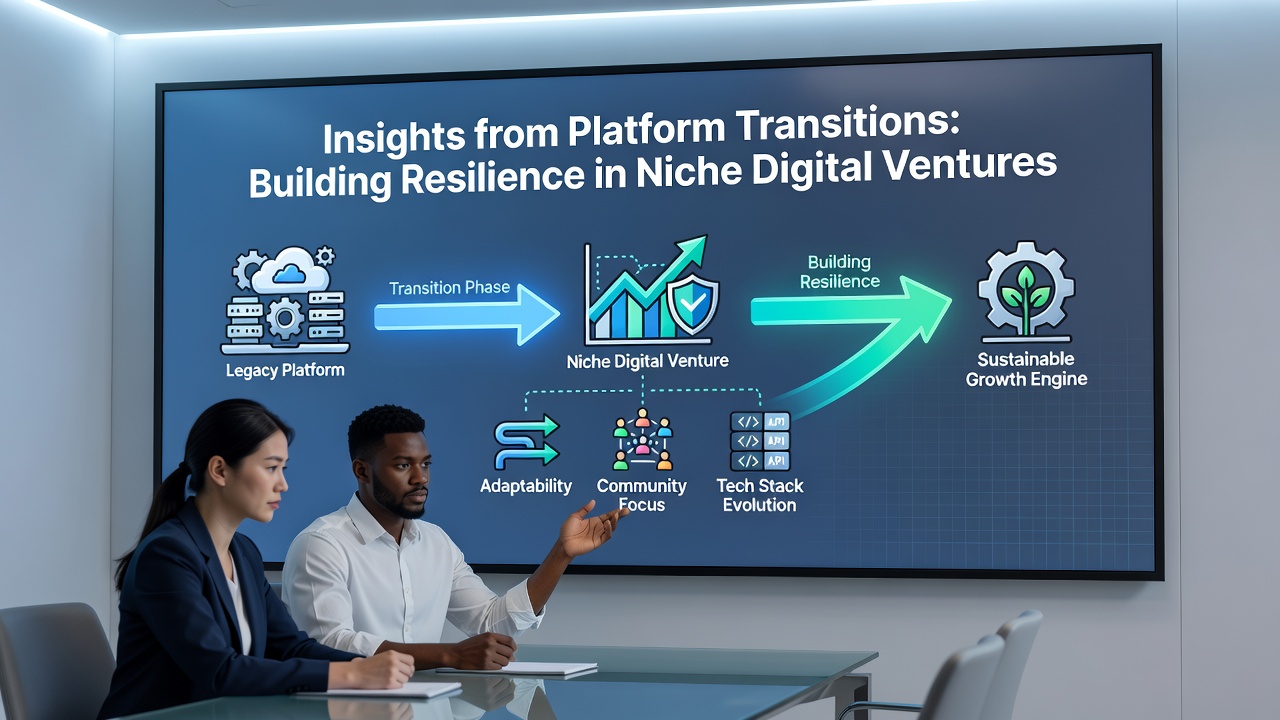
But here's the thing: technical readiness alone does not cover all variables. Audience retention requires parallel efforts in direct relationship building, such as email lists or owned community spaces, because algorithm-driven discovery can shift without notice. Evidence from longitudinal studies shows ventures that cultivated these direct channels retained 60 percent more users through major platform events compared to peers who relied solely on third-party distribution. People often find that combining these approaches creates compounding advantages, as retained users provide feedback loops that inform further technical refinements.
Case Examples from Niche Sectors
One study revealed how a specialized marketplace for handmade goods navigated a hosting provider transition by pre-staging mirrored databases and testing failover procedures over six months. The operation maintained transaction volumes with only brief interruptions, and subsequent analysis attributed this outcome to the presence of redundant supplier onboarding workflows. There's this case where experts found similar success among educational content platforms that had already developed offline-capable apps, allowing continued access even when primary web services encountered disruptions.
So the pattern repeats across regions: preparation through modular design and multi-channel presence correlates with faster stabilization. Figures released by the Canadian Digital Research Alliance indicate that ventures applying these methods saw recovery periods shorten from weeks to days in documented instances between 2023 and 2026. Observers note the consistency of these results regardless of venture size within the niche category.
Looking Ahead to Ongoing Developments
Platform ecosystems continue evolving, and September 2026 data points suggest upcoming regulatory frameworks in multiple jurisdictions may accelerate further transitions. Ventures that treat resilience as an ongoing operational discipline rather than a one-time project position themselves to handle successive changes with less friction. Researchers continue to compile datasets that track these adaptations, providing benchmarks for new entrants in specialized digital markets.
Conclusion
Platform transitions present recurring challenges for niche digital ventures, yet evidence consistently shows that proactive technical diversification paired with direct audience channels produces measurable improvements in continuity. Data from government and academic sources across regions confirms these approaches reduce downtime and support sustained operations through successive shifts. Those monitoring the space will likely see further validation of these patterns as additional transitions unfold.