Amir Zimmermann · 8 October 2026
Shifts in Audience Connection Strategies During Backend Platform Overhauls
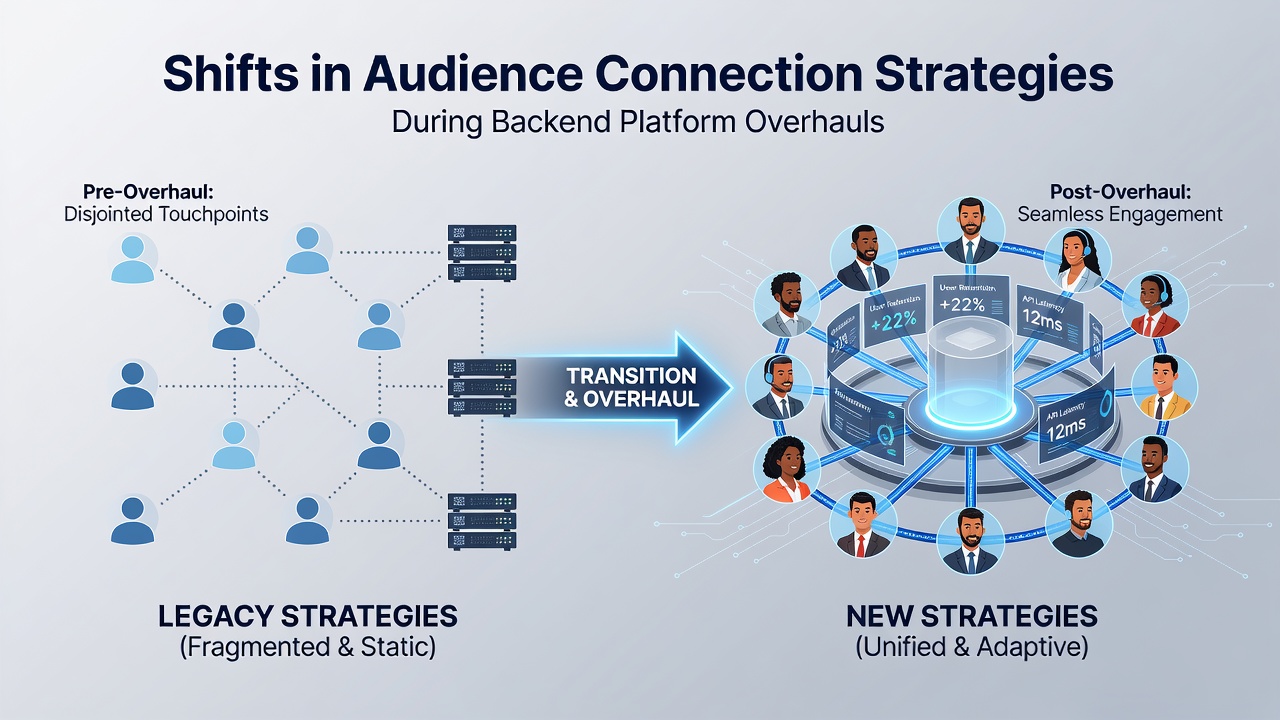
Backend platform overhauls involve extensive changes to server infrastructure, database architectures, and API frameworks that support digital services, and these updates often coincide with adjustments in how organizations maintain connections with their audiences. Research indicates that platforms handling millions of daily interactions experience measurable changes in user retention patterns during such transitions, particularly when migration timelines extend beyond six months. Data from industry reports show that organizations prioritize new notification systems and integrated dashboards to replace older email campaigns and static newsletters as backend systems stabilize.
Core Elements of Backend Overhauls
Organizations typically restructure data pipelines and authentication protocols during these projects, which alters the speed and reliability of content delivery to end users. Studies from academic institutions reveal that API rate limits and caching mechanisms introduced in new backends can reduce load times by up to 40 percent once fully deployed. Those who've examined migration logs note that teams often test audience-facing features in staged rollouts to avoid service interruptions that might otherwise trigger user churn.
October 2026 marks a period when several mid-sized digital platforms completed major backend migrations, according to tracking data compiled by technology research groups. These updates frequently included shifts toward real-time personalization engines that draw on updated user behavior datasets stored in cloud-native environments. Observers note that connection strategies moved away from batch-processed communications toward event-driven triggers embedded directly in the new platform layers.
Changes in Direct Audience Outreach
Traditional outreach relied on scheduled emails and forum posts, yet backend overhauls enable seamless integration of in-app messaging and push notifications that respond to live user actions. Figures from a OECD digital economy analysis indicate that platforms adopting these tools during infrastructure upgrades saw engagement rates climb by an average of 18 percent within the first quarter post-migration. Teams reconfigure audience segmentation rules using new query languages that pull from unified data lakes rather than fragmented legacy tables.
Case examples include specialized content networks that introduced live activity feeds linked to backend event streams, allowing users to receive updates without leaving the application interface. Researchers discovered that this approach reduced bounce rates compared with external link distributions used before the overhaul. What's interesting is how these systems also incorporate feedback loops that adjust content priorities based on aggregated interaction data collected after the backend stabilizes.
Role of Third-Party Integrations
Many organizations incorporate social media APIs and analytics platforms into their revised backend structures to extend audience touchpoints beyond the primary site. A Brookings Institution examination of platform transitions highlights that integration of these external services during overhauls can maintain consistent messaging across channels even when core databases undergo schema changes. Data shows that teams validate these connections through automated testing suites to ensure synchronization remains intact throughout the migration window.
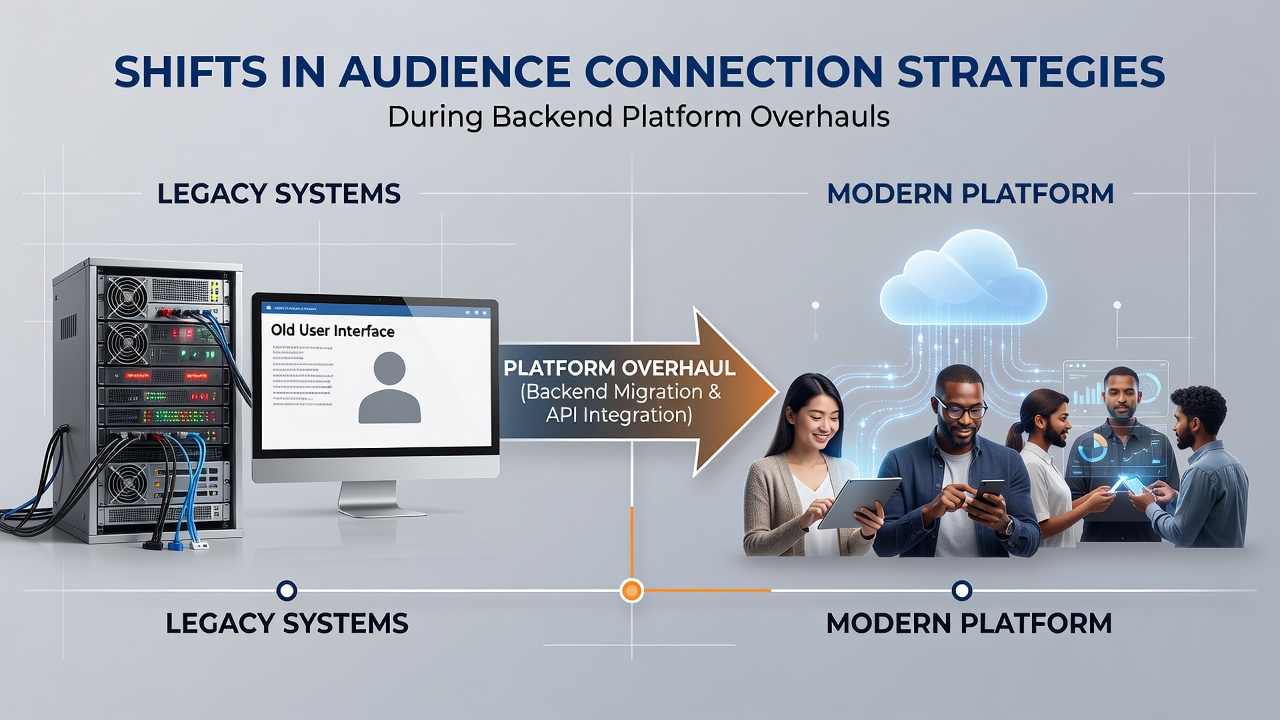
Additional tools such as customer relationship management connectors become standard when legacy systems no longer support required data export formats. Those monitoring these projects observe that organizations schedule training sessions for support staff to familiarize them with updated dashboards that surface audience metrics pulled from the new backend. This preparation helps sustain response quality during the period when older reporting interfaces are decommissioned.
Measurement and Adjustment Processes
Analytics frameworks receive updates alongside backend changes, enabling more granular tracking of session durations and conversion paths that were previously limited by older data structures. Evidence suggests that platforms publish revised key performance indicators to their audiences through transparent status pages that detail system improvements. These communications often occur via the same in-platform channels that replaced earlier external broadcasts.
Longer migration phases require interim strategies such as mirrored content distribution to prevent gaps in audience access. Researchers have documented instances where organizations maintained parallel legacy and new backend connections for several weeks to allow gradual audience migration without abrupt service shifts. The reality is that these parallel operations demand careful coordination between engineering and community management teams to keep messaging aligned.
Conclusion
Backend platform overhauls prompt organizations to adopt more dynamic audience connection methods that leverage real-time data flows and integrated third-party services. Reports compiled through October 2026 demonstrate consistent patterns where notification systems and segmented outreach replace slower batch processes once new architectures reach production stability. Continued monitoring of these transitions shows that sustained engagement depends on thorough testing of audience-facing features throughout the overhaul timeline.